
Student‑athlete academies are evolving from “basketball first” or “travel‑team add‑ons” into serious academic environments that must prove quality, integrity, and outcomes. In 2026, accreditation—especially digital‑first, global accreditation—is becoming a strategic tool for these academies to demonstrate that they are more than training facilities; they are full learning environments preparing students for college, careers, and life.
Why student‑athlete academies need accreditation
Parents of elite or aspiring athletes increasingly ask two questions at the same time: “Will this program develop my child as an athlete?” and “Will this school keep them on track academically and for college eligibility?” Traditional high schools and online programs have responded by seeking both institutional accreditation and, in some cases, NCAA approval for specific courses to protect pathways into collegiate athletics.
Accreditation matters for student‑athlete academies because it:
- – Signals that the school’s curriculum, faculty, and assessment systems meet recognized standards, not just internal expectations.
- – Provides an external structure for continuous improvement in areas like instructional quality, student support, data use, and governance.
- – Gives families more confidence that credits, transcripts, and diplomas will be respected by colleges, scholarship committees, and other receiving institutions.
A new model: 180 Degrees Academy
180 Degrees Academy, based in Texas, represents a new generation of student‑athlete academies that integrate academics, athletics, character formation, and purpose from day one. Launching its first cohort in January 2026, the academy positions itself as “Education. Athletics. Character. Purpose.” and is designed for student‑athletes who need rigorous academics wrapped around demanding training and competition schedules.
In practice, that means:
- – A college‑preparatory academic program delivered in flexible, digitally supported formats so student‑athletes can stay on pace even when travel intensifies.
- – Leadership workshops and personal growth seminars that build confidence, resilience, and life skills beyond sports.
- – A campus culture that emphasizes character, accountability, and community impact, not just highlight reels or rankings.
Leadership that centers character: Executive Director Henry Sims

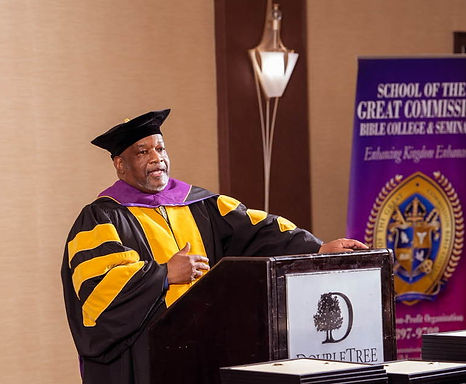
At the heart of this model is Executive Director Henry Sims, a distinguished leader dedicated to the holistic growth of student‑athletes. As Executive Director of 180 Degrees Academy, Sims combines extensive experience in athletic mentorship with a strong commitment to educational advancement, shaping a culture where discipline and destiny are intentionally linked.
Guided by a belief in the power of character, discipline, and confidence, Sims works to equip every student he mentors with the tools to excel not only in sports, but also in academics and life. His leadership helps ensure that the academy’s promises around transformation, leadership, and purpose are grounded in lived practice, not just branding language.

Why 180 Degrees Academy pursued IACDE candidacy
To match its vision with external validation, 180 Degrees Academy has entered Candidate Status with the International Accrediting Commission for Digital Education (IACDE), a global body focused on quality assurance for online, hybrid, and digitally enhanced learning providers. Candidate Status signals that the academy has completed IACDE’s initial eligibility and application review and is now moving through a structured, multi‑stage accreditation pathway.
Under IACDE’s model, 180 Degrees Academy will:
- – Complete a self‑study that documents how its academic programs, student‑athlete supports, leadership development, and digital learning environment align with IACDE’s standards.
- – Participate in peer review, where external evaluators with experience in digital education, K–12 innovation, and quality assurance examine evidence and provide feedback.
- – Address recommendations through continuous improvement plans, ensuring that the academy’s systems can scale without losing rigor or student focus.
For families and partners, IACDE candidacy is not a guarantee of future accreditation, but it is a visible sign that the academy is serious about meeting international benchmarks for digital teaching and learning.
What IACDE Candidate Status means for families
For a parent of a student‑athlete, accreditation conversations can feel abstract—yet they have concrete implications for daily life and long‑term opportunity. When an academy like 180 Degrees enters Candidate Status with a digital‑focused accreditor, it typically means:
- Curriculum and assessment are under review. Course sequences, grading policies, and assessments are examined to ensure they support college readiness and long‑term learning, not just eligibility in the short term.
- Student support is being formalized. Tutoring, advising, mental‑health referrals, and academic monitoring must be documented and evaluated, which directly affects how student‑athletes balance training with coursework.
- Data on outcomes will matter. Over time, the academy will be expected to track and use data on graduation, college placement, retention, and other outcomes, and to show how it learns from that data.
For 180 Degrees Academy, this process reinforces the promise it makes to families: that students are not asked to choose between serious academics and serious athletics.
Digital accreditation and the future of student‑athlete education
The rise of online and hybrid models has opened new possibilities for student‑athletes who need schedule flexibility, individualized pacing, and access to specialized instruction. At the same time, it has raised valid questions about quality, oversight, and whether “online” means “less rigorous.”
Digital‑first accreditation frameworks, such as those used by IACDE, are designed to:
- – Evaluate how learning technologies are actually used to support engagement, feedback, and mastery—not just to move content online.
- – Ensure that virtual and hybrid students receive comparable academic support, advising, and community connection to their on‑site peers.
- – Hold institutions accountable for transparency about outcomes, policies, and student protections in an increasingly global market.
Student‑athlete academies that embrace this level of scrutiny can differentiate themselves from programs that rely only on branding or facilities, especially as families become more sophisticated consumers of both sports and education services.
How institutions and families can take next steps
The 180 Degrees Academy case illustrates how an emerging academy can align a student‑athlete model—with strong leadership from an Executive Director like Henry Sims—with a serious quality‑assurance framework. For other schools, academies, and training organizations considering a similar path, IACDE offers several structured on‑ramps.
Leaders can:
- – Learn how the IACDE accreditation process works and which path fits their model: https://iacde.org/get-accredited/
- – Start an application for Candidate Status and upload their institutional profile: https://iacde.org/apply-now/
- – Become a member of IACDE to connect with peers, evaluators, and innovators: https://iacde.org/become-a-member/
- – Use “Get Started” pathways to clarify whether membership, candidacy, or evaluator training is the right next step: https://iacde.org/get-started/
For families interested specifically in 180 Degrees Academy, the next steps are to:
- – Explore the academy’s vision, model, and programs: https://180degreesacademy.com
- – Review admissions and enrollment details for upcoming cohorts: https://180degreesacademy.com/resources/
- – Connect with Executive Director Henry Sims and the academy’s team to discuss fit for your student‑athlete: https://180degreesacademy.com/contact/
By combining an innovative student‑athlete model, values‑driven leadership from Henry Sims, and a rigorous digital accreditation pathway, 180 Degrees Academy and IACDE together illustrate what quality‑driven, future‑ready education for athletes can look like in 2026 and beyond.