
Understanding the Rise of Digital Credentials
Digital transformation has reshaped how individuals learn, demonstrate expertise, and compete in global talent markets. As organizations and educational institutions continue shifting toward online and blended learning, digital credentials have emerged as a crucial tool for signaling verified skills. These credentials offer a modern and accessible way to document learning achievements while ensuring that competencies are transparent, shareable, and secure. Their increasing adoption reflects a powerful shift toward lifelong learning, workforce reskilling, and competency-based education—making them essential for both learners and institutions committed to remaining competitive in the digital age.
What Digital Credentials Really Are
Digital credentials represent verified proof of learning or demonstrated competencies stored electronically. Unlike traditional paper-based certificates, digital credentials are designed to be portable, shareable, and secure through blockchain or similar verification technologies. They allow learners to showcase their skills on digital platforms, including professional networks, institutional portals, and employment systems. This evolution ensures that individuals can communicate their strengths with clarity, while employers gain a reliable method to validate qualifications quickly and authentically.
Digital Badges: Visual Proof of Verified Skills
Digital badges are one of the most recognizable forms of digital credentials. A digital badge includes an icon, metadata, and verification link that collectively represent a specific achievement. Each badge contains embedded information outlining what was learned, who issued the badge, and how mastery was assessed. This makes badges not only visually compelling but also exceptionally transparent. They allow learners to stack skills over time, creating a visual portfolio that highlights their development. For institutions and organizations, digital badges provide a streamlined way to reward progress, motivate learners, and publicly acknowledge specialized competencies.
Certificates: Structured Learning with Formal Recognition
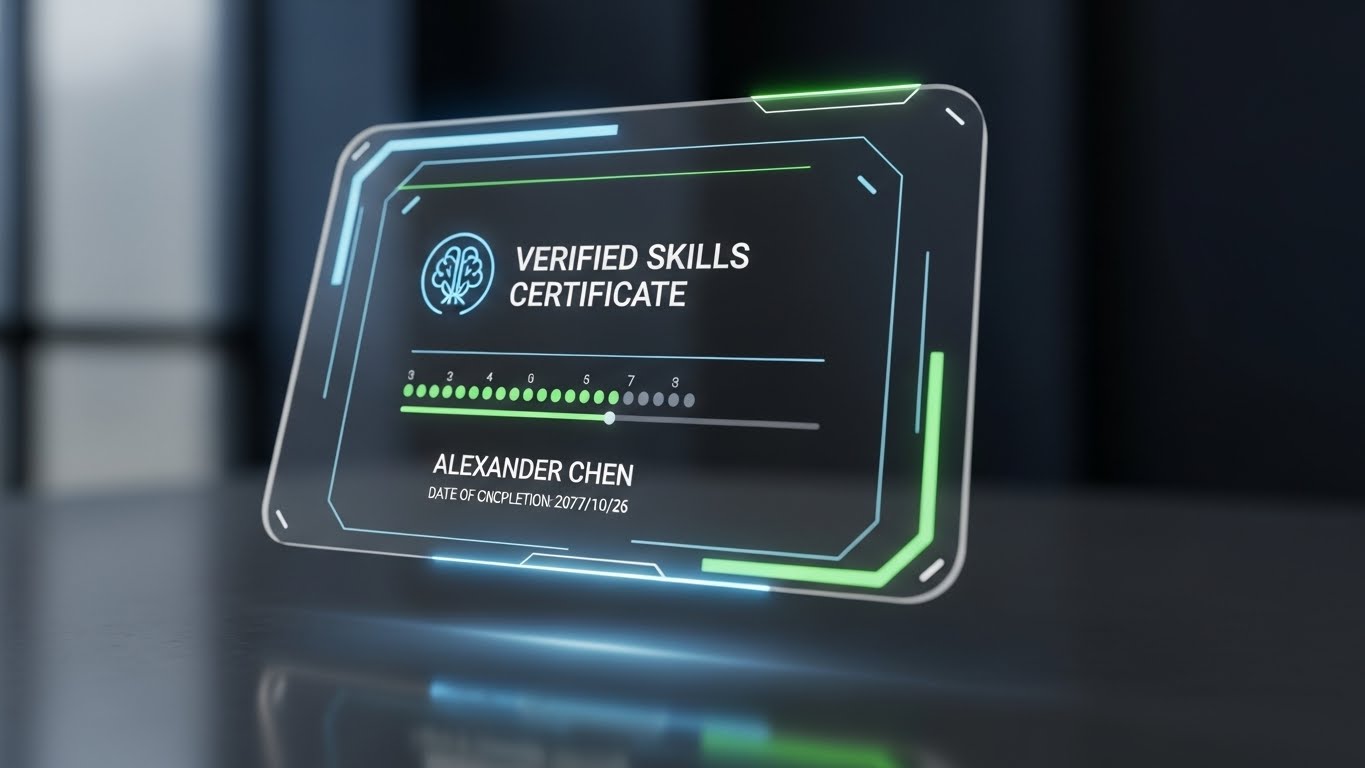
Digital certificates represent a comprehensive learning experience that focuses on structured instruction, assessment, and measurable outcomes. While sometimes confused with badges, certificates typically require more extensive coursework and deeper engagement with subject matter. They serve as formal recognition of mastery in larger and more advanced areas, such as cybersecurity foundations, data analytics, leadership development, or faith-based counseling. The digital format allows certificates to be easily verified, electronically stored, and shared across platforms without the risks associated with lost physical documents. Institutions benefit from digital certificates because they enhance credibility, streamline record-keeping, and expand access to learners globally.
Micro-Credentials: Flexible, Modular, and Career-Focused
Micro-credentials have become powerful tools for learners seeking rapid, practical upskilling. Unlike traditional degrees, micro-credentials focus on specific, career-relevant competencies delivered through short, targeted learning experiences. They empower learners to build personalized pathways toward professional mastery, whether through a single stand-alone skill or through a series of stackable competencies that may contribute toward a larger credential. Micro-credentials are particularly valuable in fast-moving fields such as technology, business innovation, education, and public service. For institutions, offering micro-credentials represents a strategic opportunity to respond to market needs, support workforce development initiatives, and enhance student engagement through modular learning pathways.
Why Digital Credentials Matter for Institutions and Organizations
Digital credentials provide institutions with a modern strategy for demonstrating academic excellence and innovation. They strengthen institutional credibility by offering transparent, verifiable, and internationally recognized records of learning. For organizations, they provide a reliable foundation for skills-based hiring, talent assessment, and workforce development. Implementing digital credentials enables employers to identify candidates who possess precisely the skills required for emerging roles. For governments and policy bodies, digital credentials support national goals related to digital literacy, economic competitiveness, and global mobility. Institutions that adopt digital credentialing systems are better positioned to remain relevant, meet market demand, and provide scalable, future-ready education.
Encouraging Action: Why Now Is the Time to Implement
The global education and workforce sectors are undergoing rapid transformation. Institutions and organizations that embrace digital credentials now position themselves at the forefront of innovation. Implementing these systems demonstrates a commitment to transparency, learner empowerment, and high-quality digital education. It enhances competitiveness and builds trust with students, employees, regulatory bodies, and international partners. Taking action today ensures alignment with global best practices and creates opportunities for recognition, collaboration, and digital transformation. Organizations and institutions ready to adopt digital credentialing frameworks can take the next step by initiating the application process through the link provided below.
Real-World Impact: How Digital Credentials Build Opportunity
Digital credentials expand opportunities for learners from diverse backgrounds by making skills visible and accessible. They break down barriers associated with traditional education systems, offering equitable access to recognition. Job seekers benefit from clearer, verified proof of their capabilities, while employers gain confidence in hiring decisions. Educators and institutions benefit from improved learner engagement and streamlined administrative processes. These combined advantages demonstrate the transformative potential of digital credentials for strengthening economies, improving employability, and supporting a culture of continuous learning.
Building the Future of Global Learning and Verification
As the world transitions toward fully digital ecosystems, digital credentials represent a foundational element of the future of education and workforce development. They create interoperable systems where skills can be recognized across institutions, sectors, and borders. With advancements in blockchain verification and AI-driven learning, digital credentials will continue to evolve, offering more robust and dynamic ways to capture human potential. Institutions that invest in digital credentialing today will lead the next generation of innovation, shaping a world where learning is continuous, measurable, and globally portable.
References
European Commission. (2022). Digital Education Action Plan (2021–2027). Retrieved from https://education.ec.europa.eu/focus-topics/digital-education/action-plan
OECD. (2022). Unlocking High-Quality Teaching. Retrieved from https://www.oecd.org/en/publications/unlocking-high-quality-teaching_f5b82176-en.html
EDUCAUSE. (n.d.). Online Learning. Retrieved from https://library.educause.edu/topics/teaching-and-learning/online-learning
Council for Higher Education Accreditation (CHEA). (1998). Assuring Quality in Distance Learning. Retrieved from https://www.chea.org/sites/default/files/other-content/HED_Apr1998.pdf
Comments are closed