

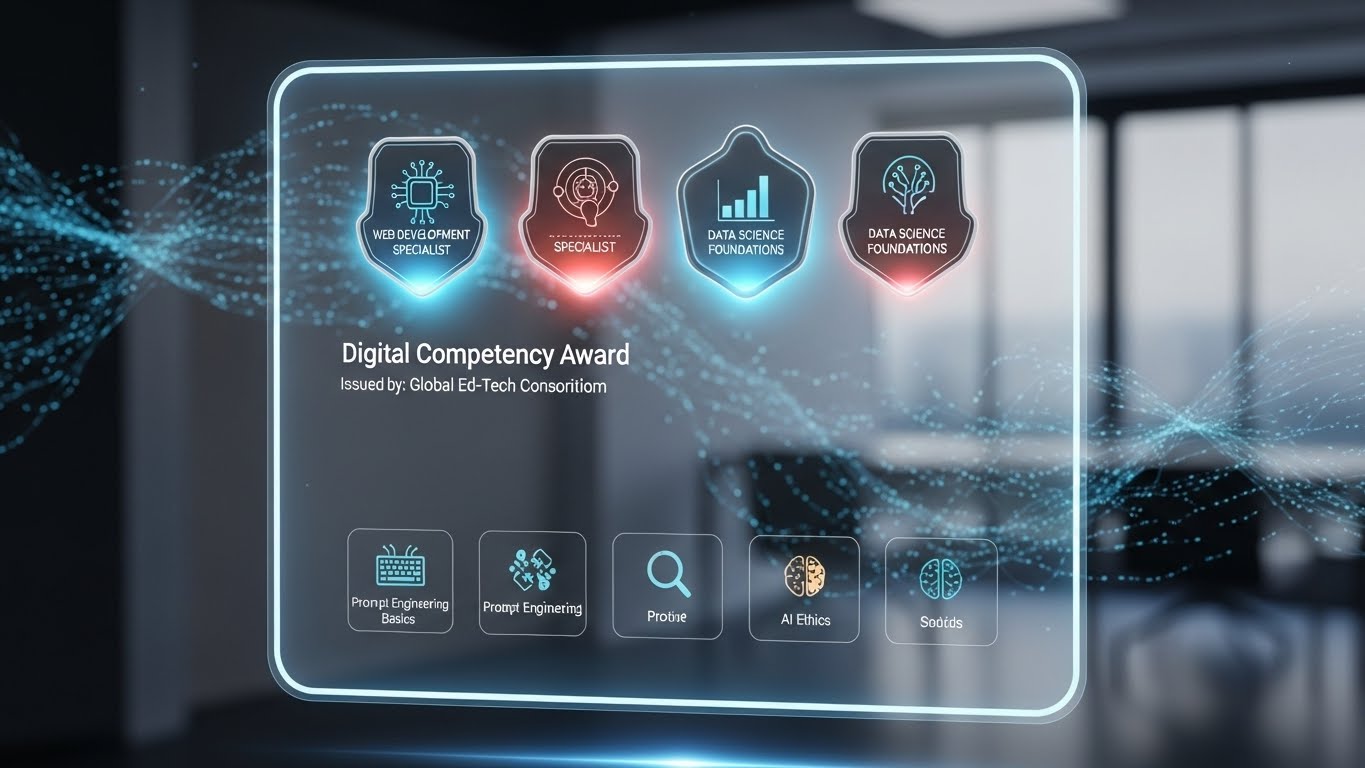
The Rise of Digital Badges as Modern Credentials
Digital badges have become one of the most powerful tools for recognizing skills in the digital age. As learning becomes more flexible, personalized, and competency-driven, institutions are increasingly turning to badges to validate achievements in ways that are transparent, portable, and employer-friendly. Far more than just decorative icons, digital badges are data-rich micro-credentials that allow learners to demonstrate exactly what they know and can do. For organizations and institutions seeking to expand credibility, enhance engagement, and align learning to workforce needs, integrating digital badges is no longer optional; it is a strategic advantage.
What Digital Badges Really Are: More Than a Symbol
A digital badge is a verified credential that represents a specific skill, competency, or accomplishment. Unlike traditional certificates, digital badges contain embedded metadata details such as the issuing institution, criteria, evidence of learning, skill descriptions, and expiration dates. This makes badges uniquely trustworthy, shareable, and useful for both learners and employers. Because badges are stored online, they can be displayed on digital profiles, résumés, LinkedIn, or e-portfolios, making them an accessible form of lifelong learning recognition. This transparency increases credibility, strengthens assessment standards, and connects learning more directly to real-world performance requirements.
How Digital Badges Work: The Technology Behind Trust
Most reputable badges operate through an open standard known as Open Badges, which ensures interoperability across platforms and institutions. Once a learner completes a requirement whether a course, workshop, skill assessment, or professional project the issuing institution creates a badge using a credentialing platform. This badge is cryptographically secured so it cannot be edited or forged. Learners receive the badge through email or a digital wallet, allowing them to display it anywhere online. Behind the badge, employers can click to see verified details of what the achievement represents. This technology-driven transparency is what makes badges an effective bridge between education and industry.
Why Digital Badges Matter: A New Currency of Learning
Digital badges respond to a global shift toward competency-based education and workforce skills development. Employers increasingly seek proof of abilities rather than just degrees, and digital badges provide exactly that—precise, validated information. For learners, badges offer motivation through incremental milestones, a clear understanding of progress, and recognition for both formal and informal learning. For institutions, badges enhance program visibility, strengthen employer partnerships, and diversify credential offerings. This shift aligns with regional and global strategies such as the Digital Education Action Plan, which encourages innovative recognition of skills to strengthen digital readiness and lifelong learning opportunities.
Institutions as Badge Issuers: Expanding Academic Value and Reach
Educational institutions, training organizations, and professional bodies can issue badges to certify skills in a structured and meaningful way. This includes academic competencies, professional development activities, digital literacy, faith-based leadership skills, wellness competencies, and continuing education programs. By integrating badges, institutions create layered learning pathways where each badge builds toward certificates, diplomas, or advanced credentials. This stackable structure improves learner engagement and institutional competitiveness.
Building a Digital Badging System: What Institutions Need to Consider
Creating an effective badging ecosystem requires thoughtful planning. Institutions should begin by identifying the skills and competencies that matter most to their community and industry partners. Each badge should include clear assessment criteria, measurable learning outcomes, and evidence of performance. Platforms such as Credly, Badgr, or Accredible help institutions issue, track, and manage badges, while offering analytics that demonstrate the demand and impact of each credential. Training staff, updating curriculum, and developing quality assurance guidelines are essential steps to establishing a reliable system that meets global expectations for transparency and accountability.
How Institutions Can Use Badges Effectively: Practical Strategies for Impact
Institutions can leverage digital badges in several transformative ways. One effective strategy is to integrate badges into existing academic programs to recognize specific competencies within broader courses, making learning more modular and employer-relevant. Another approach is to issue badges for extracurricular achievements such as leadership, mentorship, service learning, or research contributions giving students a holistic portfolio of abilities beyond the classroom. Institutions can also create pathways where a collection of badges leads to professional certificates or advanced standing in academic programs, increasing motivation and persistence. Finally, building partnerships with employers ensures badges reflect real-world needs and increase job-market competitiveness.
Encouraging Employers to Adopt and Trust Badges
For digital badges to deliver maximum value, employers must understand their purpose and reliability. Institutions can support this by co-designing badges with industry partners and involving employers in competency definition and assessment models. Hosting employer roundtables, publishing badge frameworks, and aligning badges with recognized standards all contribute to greater trust and adoption. When employers see evidence-based, transparent information behind each badge, they begin to use them as validated indicators of workplace readiness, leadership capability, or specialized technical skills. This strengthens institutional relevance, improves alumni outcomes, and positions badges as part of workforce planning and recruitment strategies.
The Future of Digital Badges: From Micro-Credentials to Global Recognition
As the digital learning landscape evolves, badges are anticipated to play a foundational role in global skills mobility. They align with emerging AI-driven learning systems, personalized pathways, and digital verification technologies that enable cross-border credential recognition. With the rapid growth of online education, institutions that adopt badging early will be better positioned to lead in flexible learning innovation. Badges also support the move toward lifelong learning, where individuals continuously update their skills in response to evolving industries. For institutions seeking relevance in the AI-driven educational economy, integrating digital credentials is essential.
Conclusion: Taking Action on Digital Badging Today
Digital badges represent a modern, trustworthy, and flexible way to recognize learning in a rapidly changing world. For institutions, adopting a digital badging system is a strategic decision that enhances credibility, relevance, and student engagement. With the right framework, badges become meaningful credentials that tell the full story of what learners can do. Institutions ready to launch a badge ecosystem can take the first step here:
References
European Commission. (2022). Digital Education Action Plan (2021–2027). Retrieved from https://education.ec.europa.eu/focus-topics/digital-education/action-plan
OECD. (2022). Unlocking High-Quality Teaching. Retrieved from https://www.oecd.org/en/publications/unlocking-high-quality-teaching_f5b82176-en.html
EDUCAUSE. (n.d.). Online Learning. Retrieved from https://library.educause.edu/topics/teaching-and-learning/online-learning
Council for Higher Education Accreditation (CHEA). (1998). Assuring Quality in Distance Learning. Retrieved from https://www.chea.org/sites/default/files/other-content/HED_Apr1998.pdf
Comments are closed